21:15
22 Eylül 2024

21:15
22 Eylül 2024
We See Aesthetics and Engineering as an Inseparable Whole in Glass Mosaic
Yazar: Eda GEDİKOĞLU
14 Jan 2026
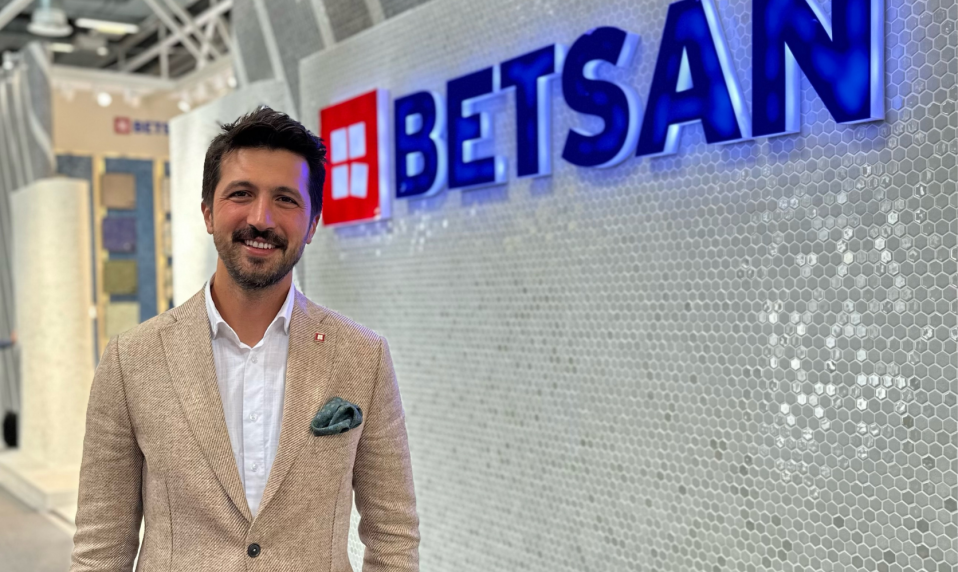
Rewriting the rules of the glass mosaic industry across production technologies, sustainability policies, design approaches, and global brand strategies, Betsan turned this transformation into tangible production power with its Kırklareli factory, commissioned in 2025. Equipped with full automation, digitally monitored systems, and advanced high technology, the new facility represents not only a capacity increase but also a new industry benchmark in terms of quality, traceability, and sustainability. Betsan General Manager Fatih Rıdvan Kaya shared insights on digital inkjet printing technology in glass mosaics, the SilyCord® system, the recycled production model, and the company’s global growth strategies.
E-Dergi
With its new production facility that became operational in Kırklareli in 2025, Betsan has entered a quality-driven transformation process in the glass mosaic sector. Featuring a fully automated, digitally monitored, and self-controlling production infrastructure, the facility has become the largest glass mosaic production center in Türkiye and has positioned itself among the top three facilities in Europe. Rıdvan Kaya describes this investment as “not merely a capacity increase, but a significant leap in speed, consistent quality, traceability, and sustainability.”
Emphasizing that Betsan’s production philosophy is built on integrating aesthetics with technical performance, Kaya states: “We do not separate aesthetics from technical performance; on the contrary, we bring these two elements together within the same design.” Glass mosaic and porcelain products developed for pools, spas, and decorative areas are designed to meet technical criteria such as 0% water absorption, high chemical resistance, and long-term mechanical durability, while also being shaped by a design approach aligned with global architectural trends.
Sustainability stands as one of the core pillars of Betsan’s production model. Highlighting that all products are manufactured from 100% recycled glass, Kaya defines this approach as “a long-term strategic investment in Betsan’s future.” With energy investments planned to be commissioned by the end of 2026, the company aims to transition to a factory structure that produces its own energy. In this way, recycled glass is processed using clean energy and transformed into glass mosaic products with high upcycling value.
On the technology front, Betsan stands out as one of the pioneering brands to fully integrate digital inkjet printing technology into an industrial glass mosaic production line. This technology enables natural stone, concrete, and organic surface effects to be applied to glass mosaics with high precision, while preserving the technical advantages of glass such as fade-resistant colors, hygienic structure, and chemical durability. Kaya summarizes this approach as “offering the aesthetics of nature with a level of technical durability and continuity that does not exist in nature.”
In global markets, Betsan has moved beyond being merely an exporting brand through its direct investments in the United States and Australia. With its Miami and Brisbane warehouses, the company has reached over 2,000 dealers in a short period of time and aims to continue its growth in Europe with new organizational structures as of 2026. This strategy positions Betsan as a brand that builds, manages, and grows its own structures on a global scale within the glass mosaic industry.
Betsan
Betsan Mozaik
Fatih Rıdvan Kaya
Popüler İçerikler

Yüzme Havuzlarındaki Son Trendler Neler?
21 Apr 2025

Poolmate Türkiye, Teknoloji ve Konforu Birleştiren Ürünleriyle Hem Verimli Hem de Kesintisiz Bir Havuz Bakım Deneyimi Sunuyor
Poolmate Türkiye, Teknoloji ve Konforu Birleştiren Ürünleriyle Hem Verimli Hem de Kesintisiz Bir Havuz Bakım Deneyimi Sunuyor
02 May 2025

Yeni Nesil Gizli Kanal Porselen Havuz Tutamakları: SUPERSTONE
03 Feb 2025
Dergimize reklam vermek ister misiniz?
Markanızın tanıtımını yaparak sektördeki yerinizi sağlamlaştırın
Şimdi İletişime Geçin